
The Spotted Dolphin
- Scientific Name: Stenella attenuataare
- Length: 7 feet
- Weight: 290 pounds
- Status: Gathering numbers and data
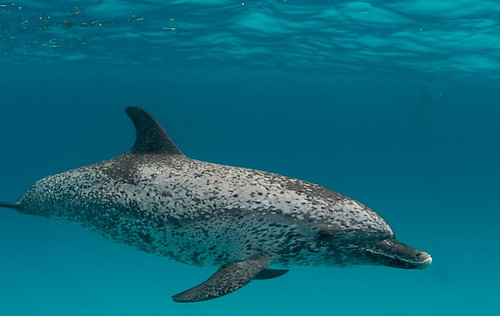
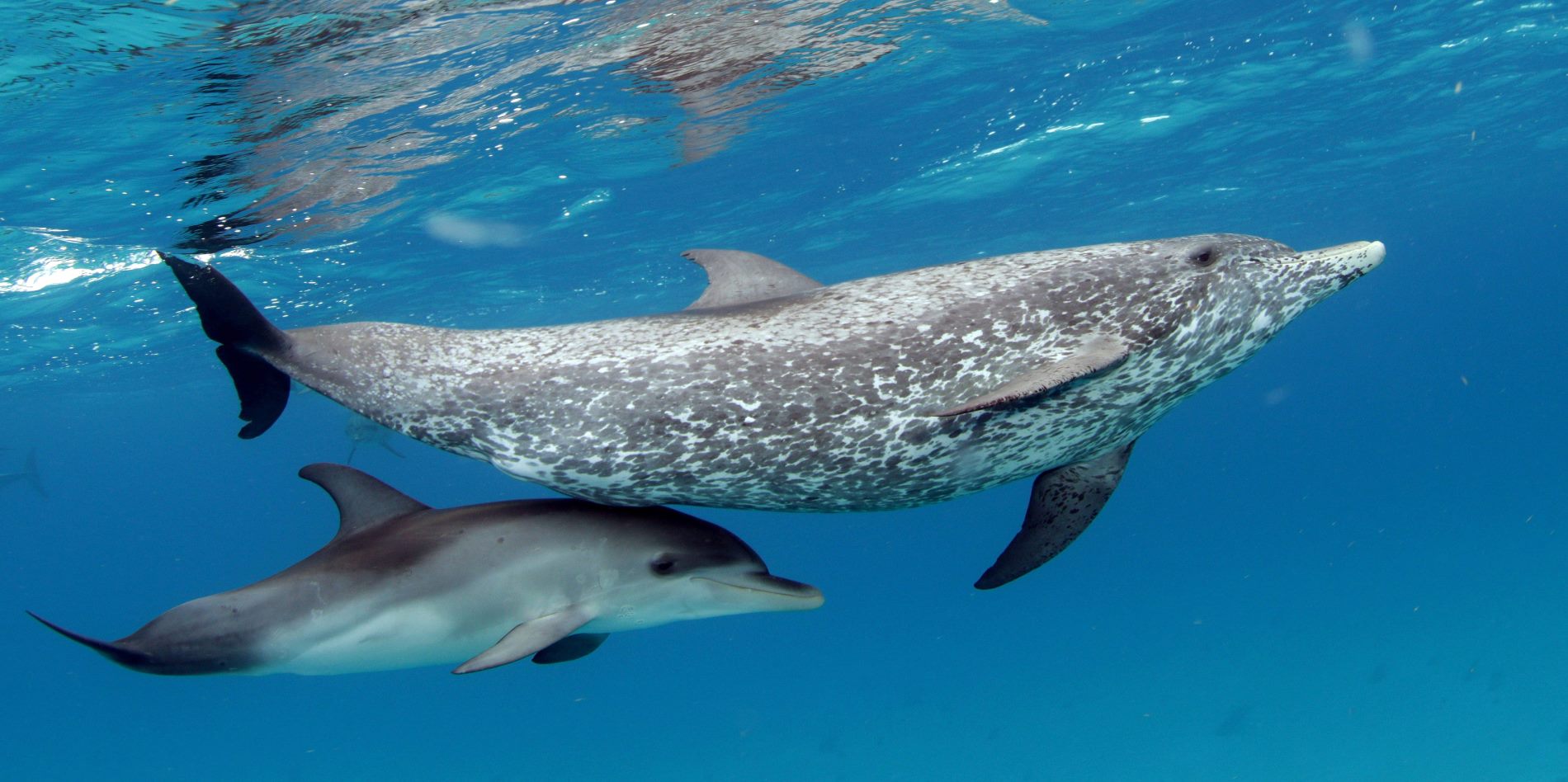
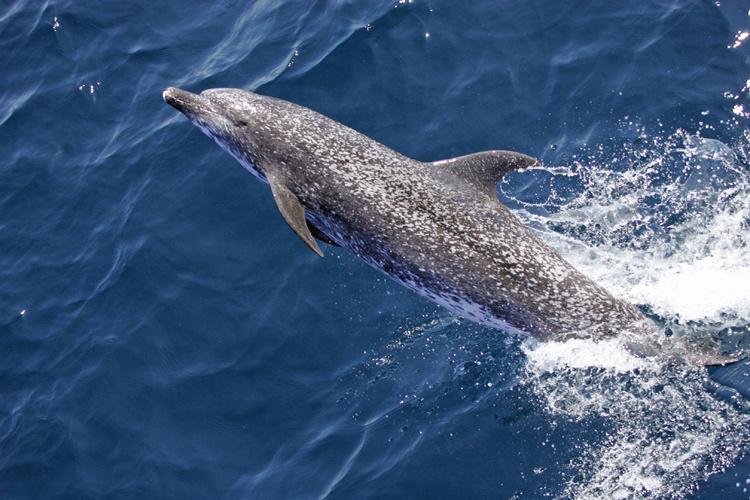
The Spotted Dolphin is easy to spot due to its “spots”. They are slightly larger than the Hawaii Spinner Dolphin also friendly. This species of dolphin can be seen around the world with slight variations. Their age can be determined by the spots and color of their nose. The other name for their nose is a “rostrum.”
Appearance
Pantropical spotted dolphins are relatively small, reaching lengths of 6 to 7 feet and weighing approximately 250 pounds at adulthood. They have long, slender snouts or beaks. Like the Atlantic spotted dolphin, pantropical spotted dolphins do not have spots at birth but accumulate them as they age until they are almost completely covered with overlapping patterns. They are also distinguished by a dark cape or coloration on their backs—stretching from their head to almost midway between the dorsal fin and the tail flukes—and by a white-tipped beak.
Behavior and Diet
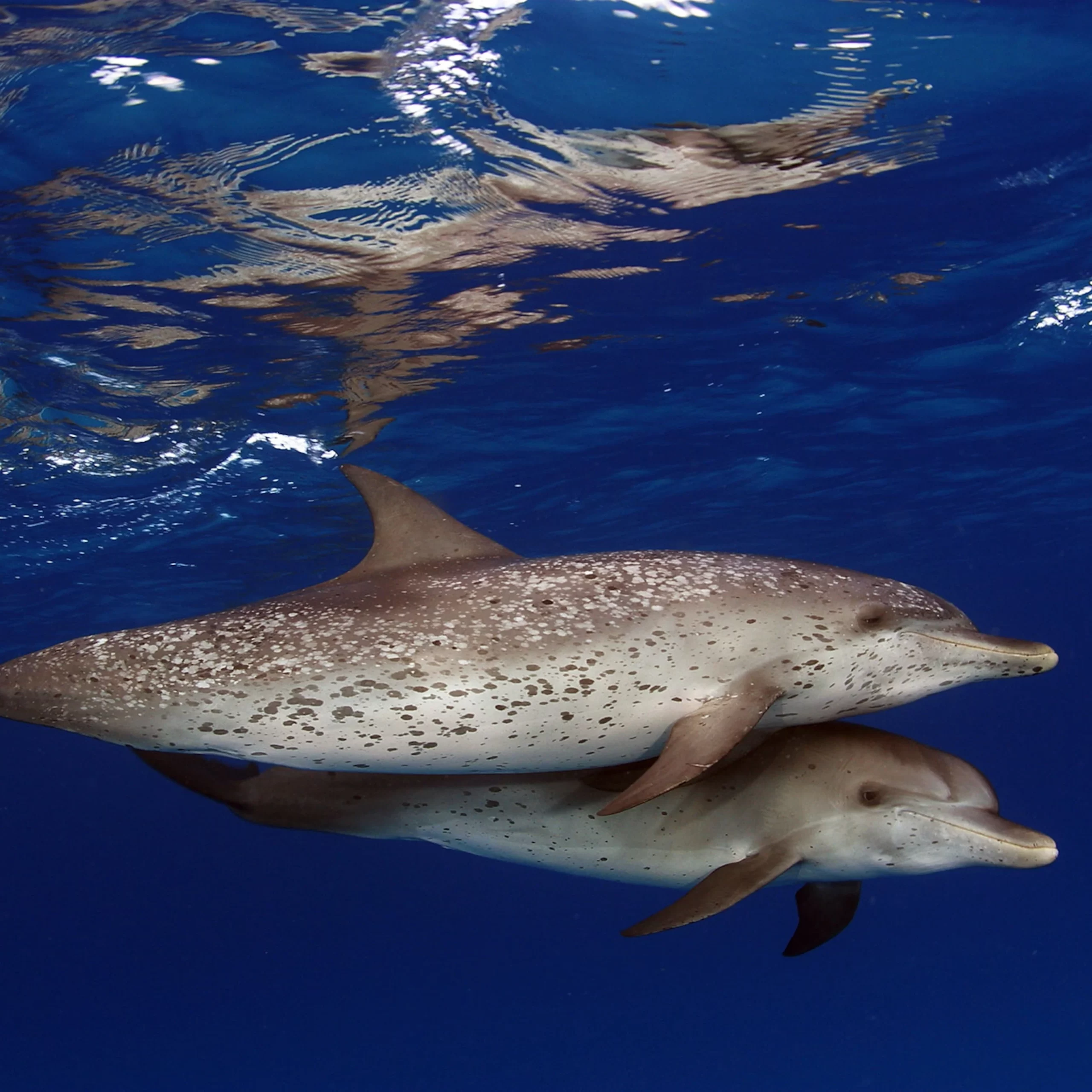
Pantropical spotted dolphins usually occur in groups of several hundred to 1,000 animals. They are considered quite social, often schooling with other dolphin species. Although their specific migratory patterns have not been clearly described, they seem to move inshore in the fall and winter months and offshore in the spring.
Pantropical spotted dolphins spend most of their day in shallower water between 300 and 1,000 feet deep. At night, they dive into deeper waters to search for prey. They feed primarily on mesopelagic cephalopods and fish.
Where They Live
Pantropical spotted dolphins can be found in all tropical and subtropical oceans worldwide. The depleted northeastern offshore spotted stock inhabits the eastern tropical Pacific Ocean, far at sea. Coastal spotted dolphins are found within 100 miles of the coast. In addition, a Hawaiian stock occurs throughout the Hawaiian Islands.
In the Hawaiian archipelago, there are genetically distinct populations of pantropical spotted dolphins found between Hawaiߵi Island, Maui Nui, Oߵahu, and offshore. Animals from each population can travel 120 to 300 miles offshore, but they are generally found closer to the islands.
Lifespan & Reproduction
The maximum lifespan for pantropical spotted dolphins is 46 years. Maturity occurs around age 11. Mating and calving occurs year-round, with gestation lasting around 11 months. Lactation usually lasts 2 years, but it may be as few as for 1 year. At 3 to 6 months old, however, calves will begin eating solid food. Calving intervals depend on the population, but they range from 2.5 to 4 years.
Threats
Entanglement
One of the main threats to pantropical spotted dolphins is becoming entangled or captured in commercial fishing gear. Entanglement is particularly threatening for the northeastern offshore spotted stock in the eastern tropical Pacific Ocean. Some species of tuna are known to aggregate beneath groups of northeastern offshore spotted dolphins in the eastern tropical Pacific. This close association led to the fishing practice of encircling a spotted dolphin school to capture the tuna concentrated below, to the detriment of the dolphin population, which were incidentally bycaught in the nets.
Illegal Feeding and Harassment
Because pantropical spotted dolphins are common and abundant throughout the Hawaiian archipelago (where they are the second most frequently sighted species during nearshore surveys), interactions with people are a growing issue for the Hawaiian stock. Illegal feeding and harassment of these dolphins have been reported.
Hunting
Pantropical spotted dolphins are hunted for food in Asia, Indonesia, the Philippines, and parts of the Pacific.