
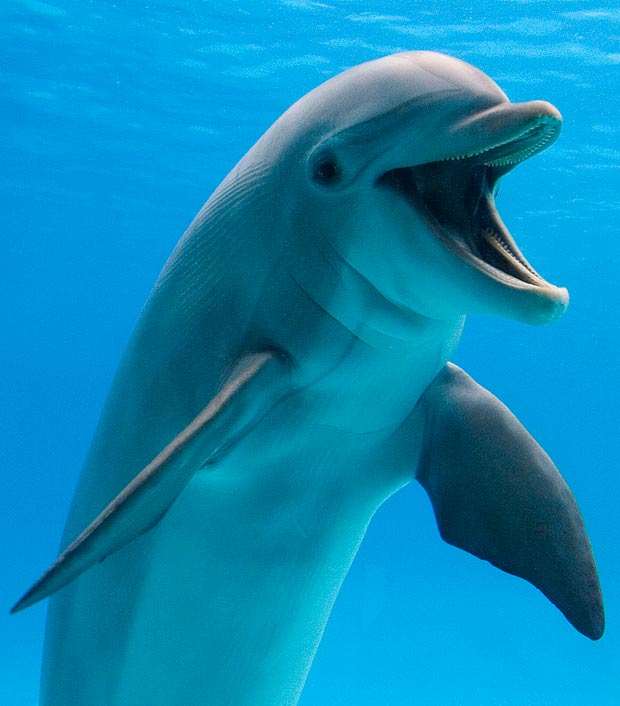
Bottlenose Dolphin
- Scientific Name: Tursiops truncates
- Length: 13 feet
- Weight: 660 pounds
- Numbers: Gathering numbers and data
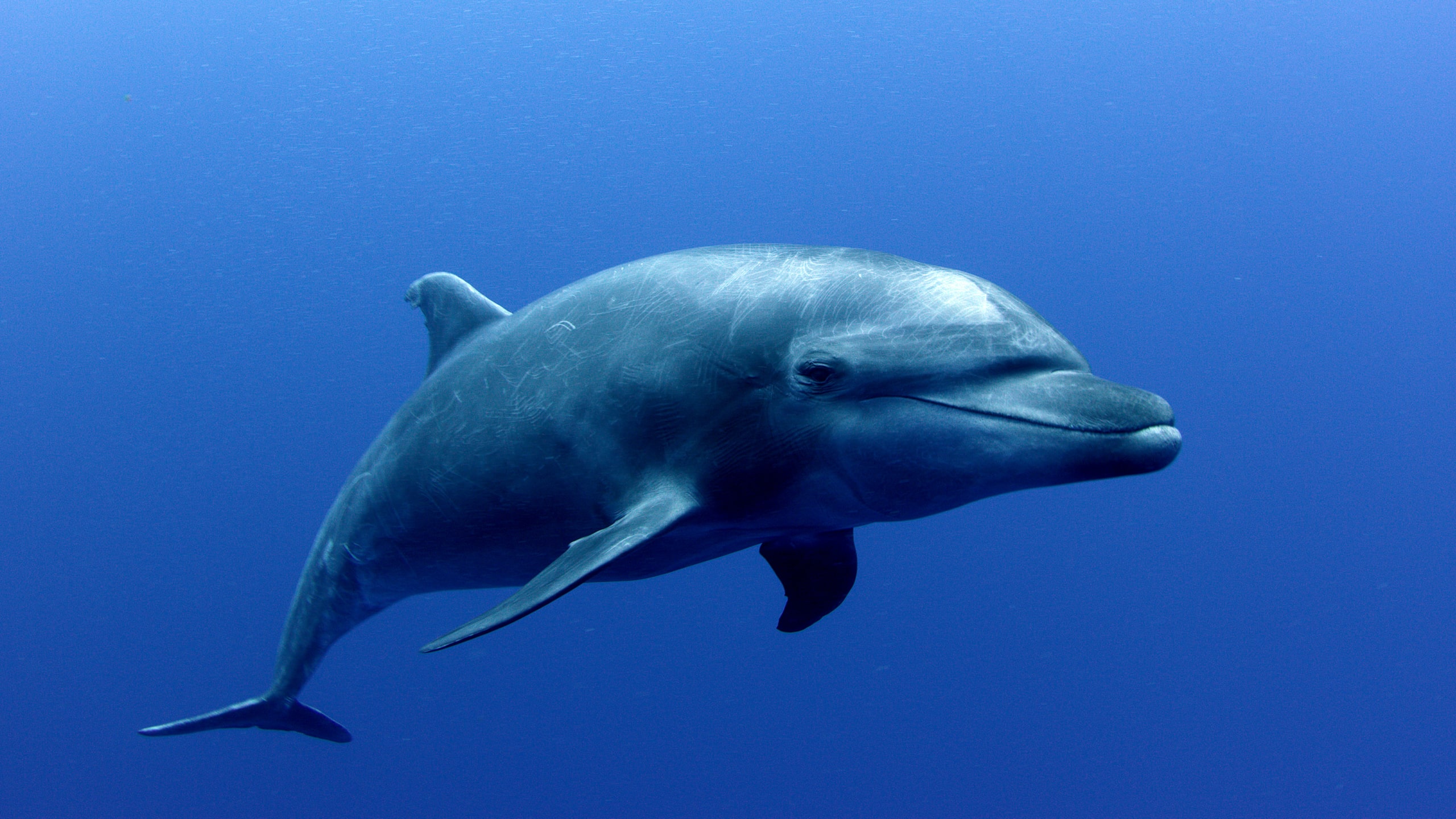
The Bottlenose Dolphin is considered to be the most beloved and most instantly recognizable of ocean animals. At 600 pounds they are the size of a bear and two times the size of the Spotted and Spinner Dolphins.
Their nose has a gray coloration and is slightly thicker.
They live in the reefs of the Hawaiian islands, follow boats and are known the be very friendly.
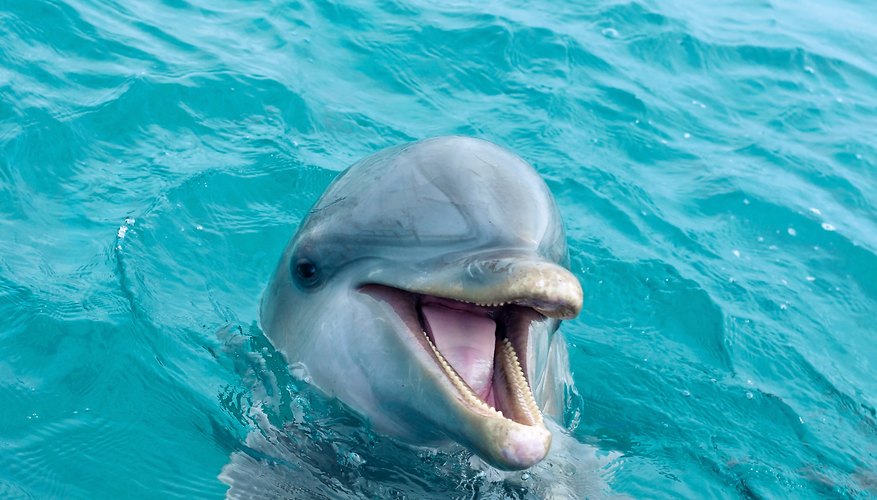
Common bottlenose dolphins (referred to hereafter simply as bottlenose dolphins) are found throughout the world in both offshore and coastal waters, including harbors, bays, gulfs, and estuaries of temperate and tropical waters (estuaries are the areas where rivers meet the sea). They are one of the most well-studied marine mammals in the wild. In addition, they are easy to view in the wild because they live close to shore and are distributed throughout coastal and estuarine waters. But this puts bottlenose dolphins at increased risk of human-related injuries and death. They are a highly intelligent species and use sound both for communication and to hunt for food.
Bottlenose dolphins in the United States are not endangered or threatened under the Endangered Species Act (ESA), but they are protected under the Marine Mammal Protection Act (MMPA). They are vulnerable to many stressors and threats including disease, biotoxins, pollution, habitat alteration including freshwater incursions, vessel strikes, human feeding of and activities causing harassment, interactions with commercial and recreational fishing, energy exploration and oil spills, and other types of human disturbance, such as underwater noise.
Behavior and Diet
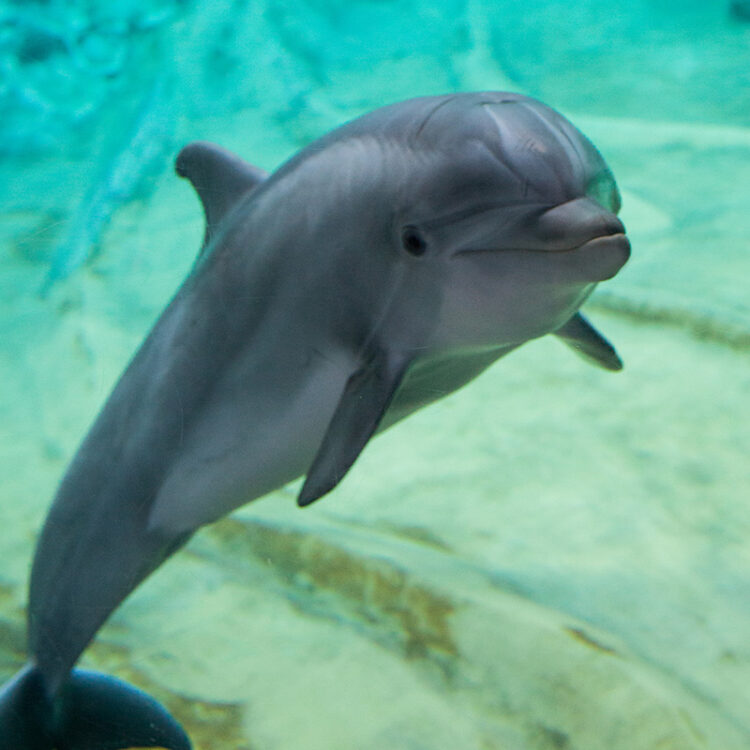
Bottlenose dolphins may travel alone or in groups, and the groups often break apart and reform. Their travel is characterized by persistent movement in a consistent direction. Resting is often characterized by tight group formations, slow movement, and intervals of methodical breathing.
Social behavior includes breeding, playing, aggression, and gentle body contact, such as rubbing. Calves maintain what is called “baby position” while swimming. In this position, the calf has easy access to nursing and may gain benefits by reducing drag from swimming in it’s mom’s slip stream. When in baby position, the mom surfaces first, and the calf surfaces slightly after and just behind and to the side of its mother.
Bottlenose dolphins can thrive in many environments and feed on a variety of prey, such as fish, squid, and crustaceans (e.g., crabs and shrimp). They use different techniques to pursue and capture prey, searching for food individually or cooperatively. For example, they work together to herd fish into groups and then take turns charging through the school of fish to feed. They may also trap schools of fish against sand bars and seawalls for an easy meal. They also use passive listening and/or high frequency echolocation to locate prey.
Instead of using their teeth to chew, dolphins grip fish with their teeth, then swallow the fish whole—head first—so the spines of the fish don’t catch in their throats.
Lifespan & Reproduction
Bottlenose dolphins can live at least 40 years, with some females outliving males at 60 years or more. They generally begin to reproduce when they are between 5 and 15 years old, with the exact age varying by population. Female bottlenose dolphins can reach sexual maturity before males. Females are pregnant for about 12 months and give birth, on average, every 3 to 6 years. Once calves are born, they nurse for 20 months or so and generally stay with their mothers for 3 to 6 years. Females as old as 45 have given birth.
Threats
Bottlenose dolphins are exposed to a variety of human-caused and natural threats and stressors. Some of the most pressing threats are discussed below.
1.Interactions with Fishing Gear
One of the main threats to bottlenose dolphins is getting caught in fishing gear. Dolphins can become entangled or captured in commercial fishing gear such as gillnets, seines, trawls, trap pots, and longlines.
In addition to interactions with commercial fisheries, dolphins may become entangled in or ingest rod-and-reel gear used by recreational anglers or for-hire fishing vessels, such as charter boats and headboats, which can lead to serious injury or mortality. This problem is increasing, especially in the southeast United States and is largely the result of dolphins taking the bait and the catch directly from fishing gear, eating discarded fish, or being fed fish (illegally) by humans, causing them to associate anglers with food. In addition, fishermen sometimes become frustrated when dolphins take their catch and can retaliate with violence towards dolphins.
2.Habitat Destruction and Degradation
Common bottlenose dolphins living near shore are also susceptible to habitat destruction and degradation by contaminants and oil spills. For example, in areas with high levels of polychlorinated biphenyls (PCBs) dolphin immune systems can be negatively affected. Dolphins in areas affected by the 2010 Deepwater Horizon oil spill were found to have compromised immune systems and decreased reproductive success(PDF, 685 pages). In addition to chemical contamination, physical habitat alteration due to shoreline development and infrastructure projects, freshwater diversions, and increased boat traffic is also of concern.
3.Biotoxins
Several common bottlenose unusual mortality events (UMEs) have occurred in recent years, linked to harmful algal blooms (HABs), such as red tide. Several HABs (or several HAB-related die-offs) have been confirmed along the coast of Florida and others were suspected elsewhere in the Gulf of Mexico. Dolphins can be exposed to HAB toxins through the air or by eating contaminated prey. Biotoxin exposure can lead to both acute and more chronic health issues for dolphins.
4.Illegal Harassment and Feeding Activities
Bottlenose dolphins are easy to view in the wild, but this also puts them at increased risk of human-related injuries and death. Feeding and attempting to feed dolphins is not only illegal under the implementing regulations of the MMPA but is harmful because it changes their behaviors and reduces their wariness of people and vessels. They learn to associate humans with food and change their natural hunting practices by begging for handouts and taking bait/catch directly off fishing gear. Dolphins, including calves, also learn these unnatural and risky feeding strategies from each other. Dolphins are then more vulnerable to vessel strikes and to fishing gear entanglements and ingestion. They also may fall victim to extreme retaliatory acts, such as shooting, by frustrated boaters and fishermen.
Dolphins may also be disturbed or harassed by the presence of humans and watercraft. Harassment is illegal under the MMPA and occurs when “any act of pursuit, torment, or annoyance has the potential to injure the animal or disrupt its behaviors.” The implementing regulations of the MMPA further prohibit “the negligent or intentional operation of an aircraft or vessel, or the doing of any other negligent act which results in disturbing or molesting a marine mammal.” Any human-caused change to a dolphin’s behavior may constitute disturbance or harassment. Certain critical survival behaviors are particularly vulnerable, and disturbance may lead to injuries or death. Long-term negative effects may include compromised health, reduced reproductive success, and displacement from or avoidance of important habitats.
NEWSLETTER