


The BIOLOGY OF THE HAWAIIAN DOLPHIN
- Whales, dolphins and porpoises belong to the Order Cetacea. Cetacea also include whales. There are over 38-40 species of dolphins fou
- and throughout the world’s oceans with 6-8 beloved to exist in Hawaii although 6 have only been recorded in recent years. The most common dolphin in Hawaii being the Spinner Dolphin, The Spotted Dolphin and the Bottlenose Dolphin.
A Quick History
Man has long been curious about the history and origins of the dolphin. The dolphin predates homosapiens by 50 million years. We share many traits with dolphin including emotions, intelligence, a mother nurturing and nursing its baby, and family structure. One of the reasons we need to understand the dolphin, is to better understand our own lives and purpose better.
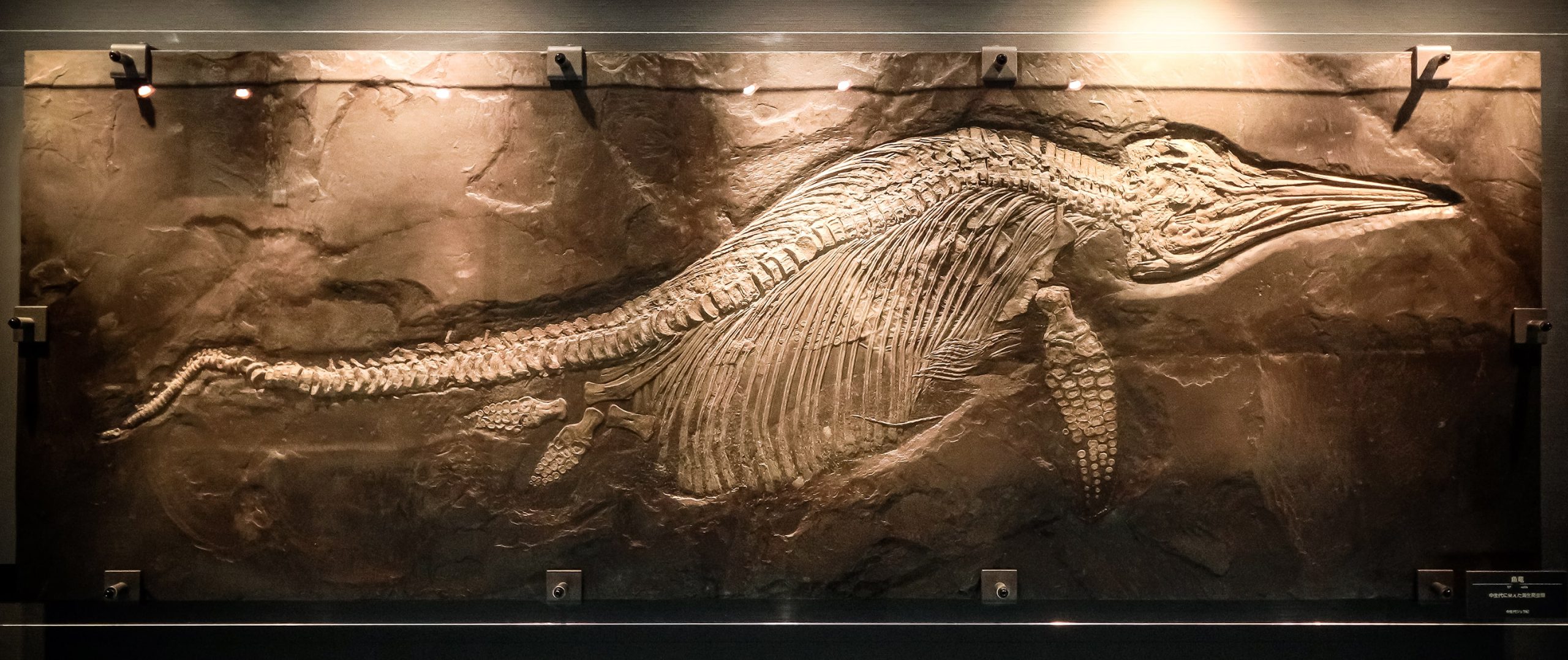
Anatomy
Dolphins have torpedo-shaped bodies with generally non-flexible necks, limbs modified into flippers, a tail fin, and bulbous heads. Dolphins range in size from the 1.7 m (5 ft 7 in) long and 50 kg (110 lb) Hawaii Spinner Dolphin to the 9.5 m (31 ft 2 in) and 10 t Orca. Several species have female-biased sexual dimorphism, with the females being larger than the males. A dolphins anatomy is a complex system well adapted to survive the ocean diving to the deep ocean and surfacing.
*While it is not our goal to explain everything about the dolphin we want to share some amazing facts about the dolphin so you can better relate to why we need to protect these beautiful animals and continue to find ways to peacefully coexist.
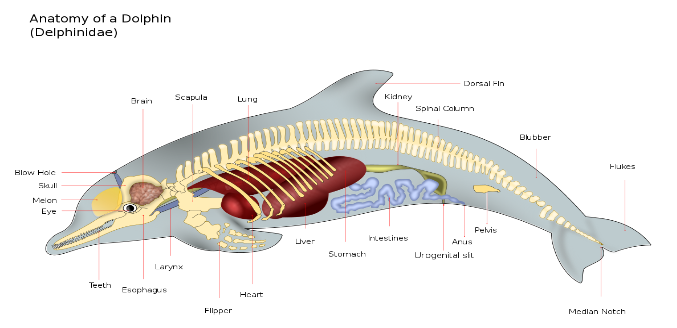

Senses
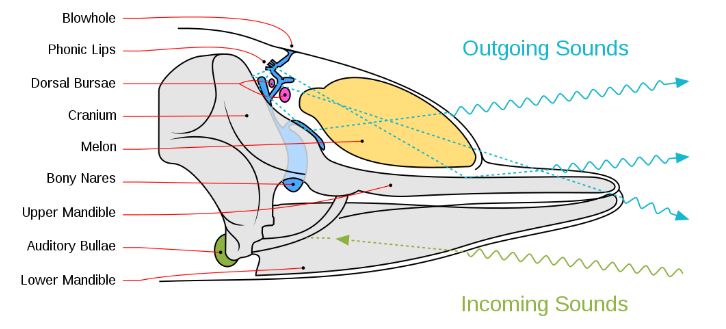
A Dolphin’s Vision
Dolphins have very good vision. When looking at things in the water an oily glandular secretion helps protect a dolphin’s eyes from the elements. The corneas and lenses of a dolphin’s eyes are shaped to see light through water. The ocular muscles, however, seem to bend the lenses to accommodate above-water viewing.
Dolphins also have very good night vision with the aid of a beautiful blue/green tissue called the tepetum lucidum. This tissue gathers all available light in a low light situation and reflects it back through the lens allowing for better vision. Cats, dogs and a variety of other animals have a tepetum lucidum allowing for night vision.

Teeth
The dolphin is born with 72 to 104 teeth that will last a lifetime. A dolphin’s smile contains a gap where you might expect to find front teeth. This gap allows the baby to latch on to the mother’s nipple without biting her.
Scientists have found that every year a dolphin lays down a new layer of enamel inside its teeth, causing a ring to form inside the tooth. Therefore, one of the ways we can determine the age of a dolphin is by counting the enamel rings found inside the teeth; one for each year of its life. This is similar to counting the rings inside a tree to determine its age.
Dolphins seem to live an average of 25 years, although some dolphins have lived into their early 60s. As a dolphin gets older, it becomes very difficult to count rings in their teeth since they are so tightly compressed.


Skin
The core of a dolphin’s body is well insulated by a thick layer of blubber. Generally, a blubber layer is anywhere between ¾” to 1¼” thick. The thickness is related to the type of environment the dolphin lives in. Colder waters require a thicker blubber layer. The blubber is actually the modified third layer or “hypodermis” of a dolphin’s skin. Skin is made up of three layers: an epidermis (top layer), a dermis (middle layer) and a hypodermis (bottom layer). The surface layer, or epidermis, of a dolphin’s skin is ten times thicker than any land mammal, and serves as protection against the elements. Additionally, the entire top layer of skin sloughs off every two to four hours, helping the dolphin stay streamlined, moist and free of external attachments while traveling through the water.
A dolphin has very pliant skin. When a dolphin reaches a certain speed while traveling through water, the typical smooth flow of water becomes more turbulent. A dolphin’s skin will actually ripple at accelerated speeds to counter the effect of turbulence as they travel through the water.

Blubber
Blubber is found within the dermis and subcutis layer of a dolphin’s skin. The dermis blends gradually with the adipose layer (also is known as fat), extending up to the epidermis border. Collagen fiber bundles extend throughout the whole subcutaneous blubber (fat found under the skin). The thickness of the subcutaneous blubber depends on the dolphin’s health, development, location, reproductive state, and how well it feeds. This fat is thickest on the dolphin’s back and belly. Most of a dolphin’s body fat is accumulated in a thick layer of blubber. Blubber differs from fat in that, in addition to fat cells, it contains a fibrous network of connective tissue. The dolphin has the unique ability to heal itself through regeneration and uses its blubber layer to control speed, sense vibrations, and buoyancy.

Dolphin News