
Short-Beaked Common Dolphin
- Scientific Name: Delphinus delphis
- Length: 5-8 feet
- Weight: 220-299 pounds
- Status: Not endangered but under protection from the Marine Mammal Protection Act
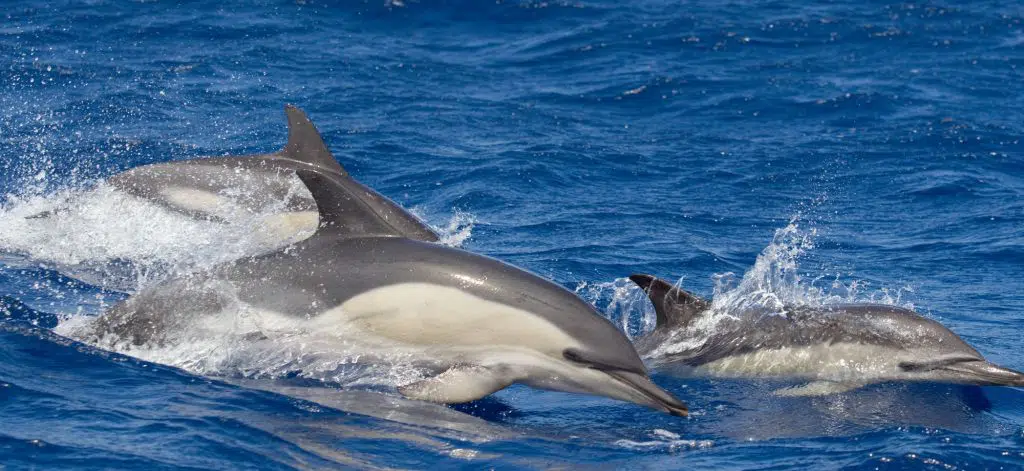
There are more Short-beaked Common Dolphins than any other dolphin species in the warm-temperate portions of the Atlantic and Pacific Oceans. They prefer the shores and the reefs along all the islands, generally on the sides closest to the mainland.
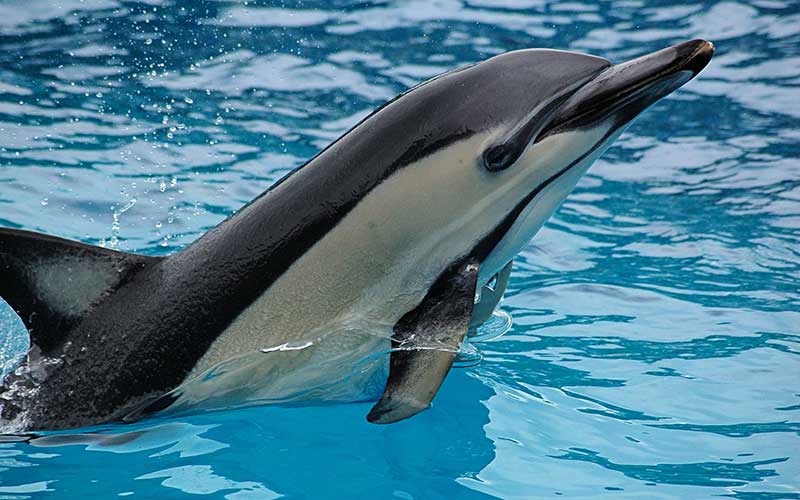
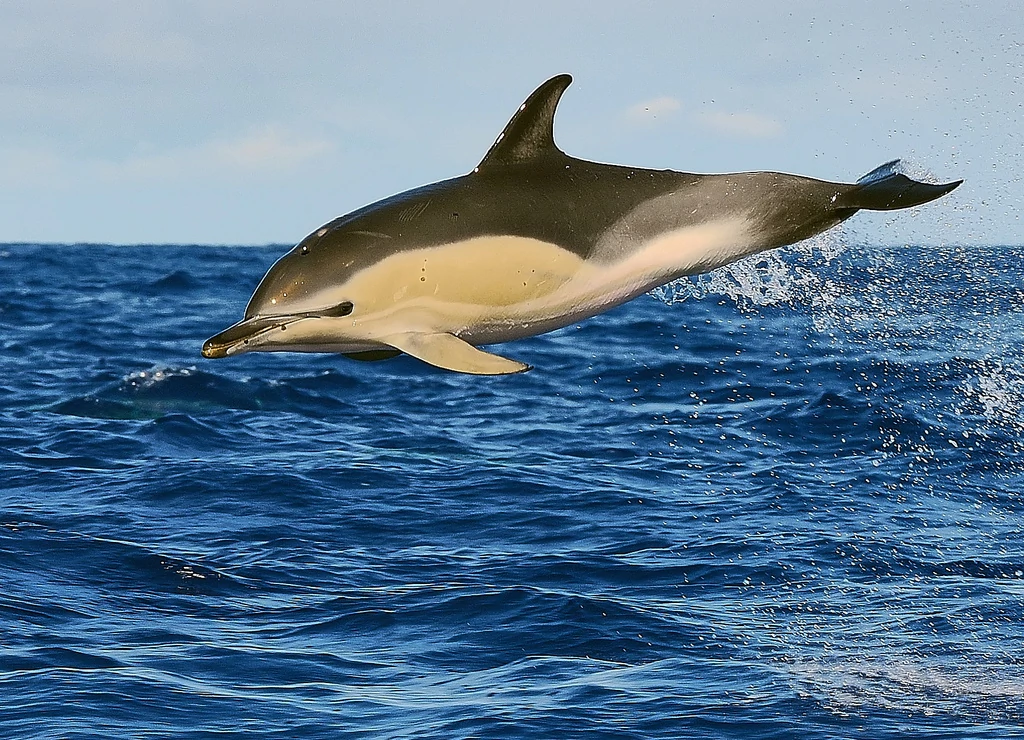
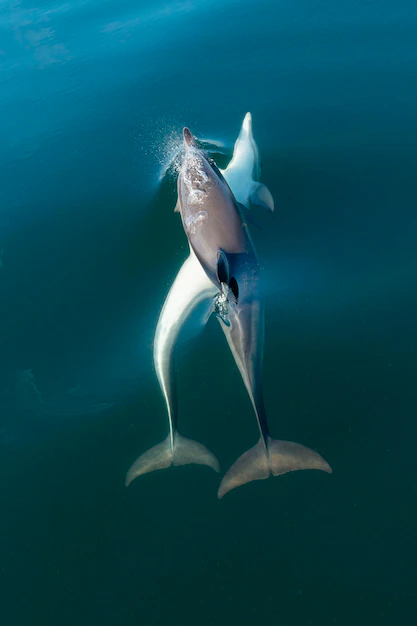
The color pattern on this dolphin is unusual for a dolphin. Their back is a dark grey ranging to black with a white underbelly and they have a light grey, yellow, or gold hourglass pattern on both their sides. They’re found year-round and are rarer than many of these other species as they’re much shyer of boats and people.
Behavior and Diet
There are more Short-beaked Common Dolphins than any other dolphin species in the warm-temperate portions of the Atlantic and Pacific Oceans. They prefer the shores and the reefs along all the islands, generally on the sides closest to the mainland.
The color pattern on this dolphin is unusual for a dolphin. Their back is a dark grey ranging to black with a white underbelly and they have a light grey, yellow, or gold hourglass pattern on both their sides. They’re found year-round and are rarer than many of these other species as they’re much shyer of boats and people.
Where They Live
Short-beaked common dolphins prefer warm tropical to cool temperate waters that are primarily offshore. They can be found along the continental slope in waters between 650 to 6,500 feet deep. In the western North Atlantic, they are often associated with the Gulf Stream current. Short-beaked common dolphins also prefer waters altered by underwater geologic features such as underwater ridges and seamounts where upwelling occurs, increasing nutrient concentrations and supporting higher productivity. The abundance and distribution of short-beaked common dolphins vary based on interannual changes, oceanographic conditions, and seasons. They can be found on the continental shelf or farther offshore. On the U.S. west coast, these dolphins are primarily associated with the California Current and are abundant off California year-round from nearshore to about 300 miles offshore. On the U.S. east coast, they are more common north of Cape Hatteras, North Carolina; however, from summer through autumn, large aggregations of short-beaked common dolphins can be found near Georges Bank (extending from Cape Cod, Massachusetts, to Nova Scotia, Canada), Newfoundland, and the Scotian Shelf. Other distinct populations can be found off of northern Europe, Newfoundland, Africa, Japan, southern Australia, and New Zealand, and in the Black Sea, the Mediterranean Sea, and the southwestern Pacific.
Lifespan & Reproduction
Short-beaked common dolphins have an estimated lifespan of up to 35 years. On average, males become sexually mature at 10 years and females at 8 years, although individuals may become sexually mature between 5 and 12 years. Off the California coast, calving takes place during the winter months after a 10- to 11-month gestation period, whereas calving takes place year-round in the eastern tropical Pacific Ocean. Every 2 to 3 years, adult females give birth to a single calf that is about 2.5 to 3 feet long. Calves begin to wean after about 1 year, but remain dependent on their mother for another year or more.
Threats
Entanglement
One of the main threats to pantropical spotted dolphins is becoming entangled or captured in commercial fishing gear. Entanglement is particularly threatening for the northeastern offshore spotted stock in the eastern tropical Pacific Ocean. Some species of tuna are known to aggregate beneath groups of northeastern offshore spotted dolphins in the eastern tropical Pacific. This close association led to the fishing practice of encircling a spotted dolphin school to capture the tuna concentrated below, to the detriment of the dolphin population, which were incidentally bycaught in the nets.
Illegal Feeding and Harassment
Because pantropical spotted dolphins are common and abundant throughout the Hawaiian archipelago (where they are the second most frequently sighted species during nearshore surveys), interactions with people are a growing issue for the Hawaiian stock. Illegal feeding and harassment of these dolphins have been reported.
Hunting
Pantropical spotted dolphins are hunted for food in Asia, Indonesia, the Philippines, and parts of the Pacific.