
False Killer Whale
- Scientific Name: Pseudorca cassidens
- Length: 14-17 feet
- Weight: 2,600 pounds
- Status: Endangered and under serious concern
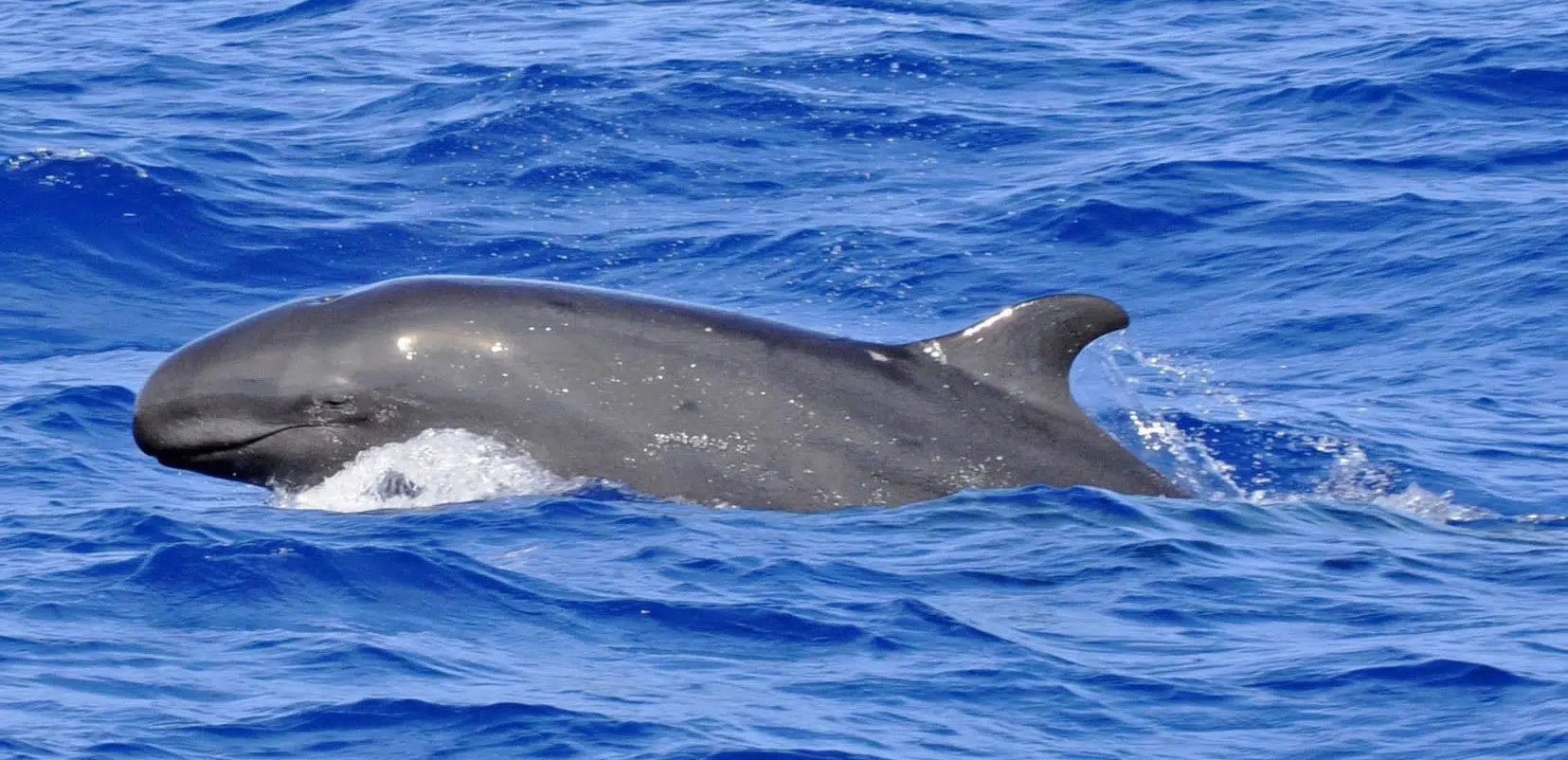
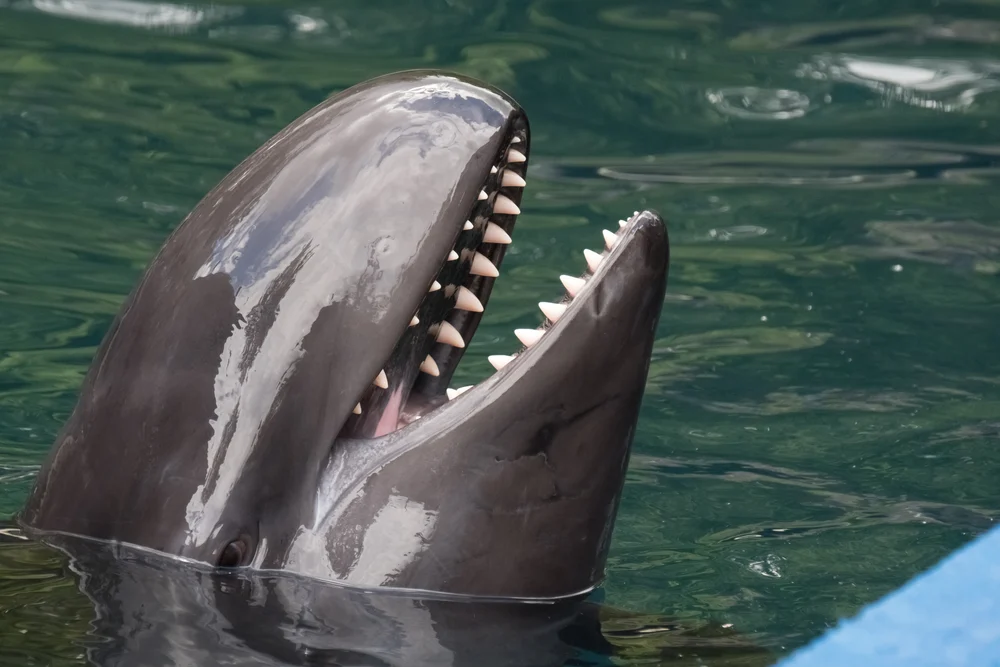
There are actually three false killer whale populations in Hawaii: pelagic, Northwestern Hawaiian Islands insular, and the currently endangered Main Hawaiian Islands insular. The name “false killer whale” is in itself misleading, as it looks nothing like a true killer whale.
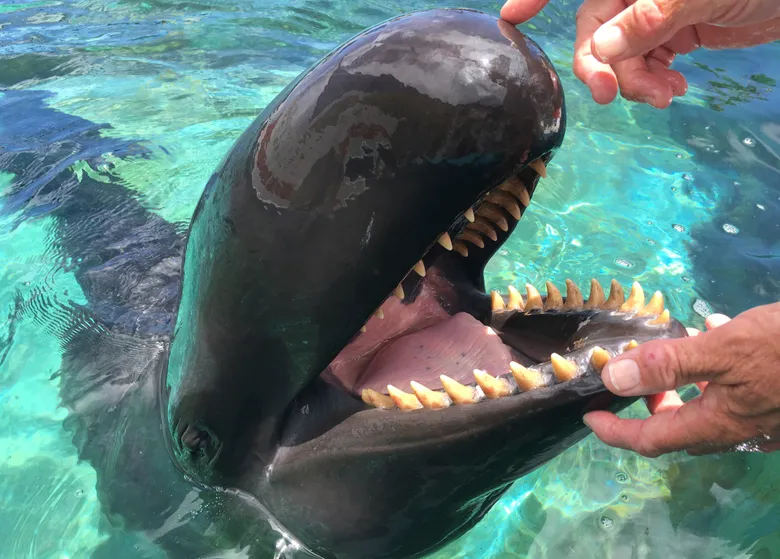
It’s dark grey in color and like the Pilot Whale, also is not a whale and is in fact a dolphin. All dolphins are actually whales, but not all whales are dolphins. They get their name from the similarities between the skulls and teeth of the Orca and the False Killer Whale.
The False Killer Whale is the most social of all the whales, going as far as to share prey with one another and, if you’re lucky, they’ll offer food to boaters and divers as well. They’re found usually around the Northwestern Islands year-round.
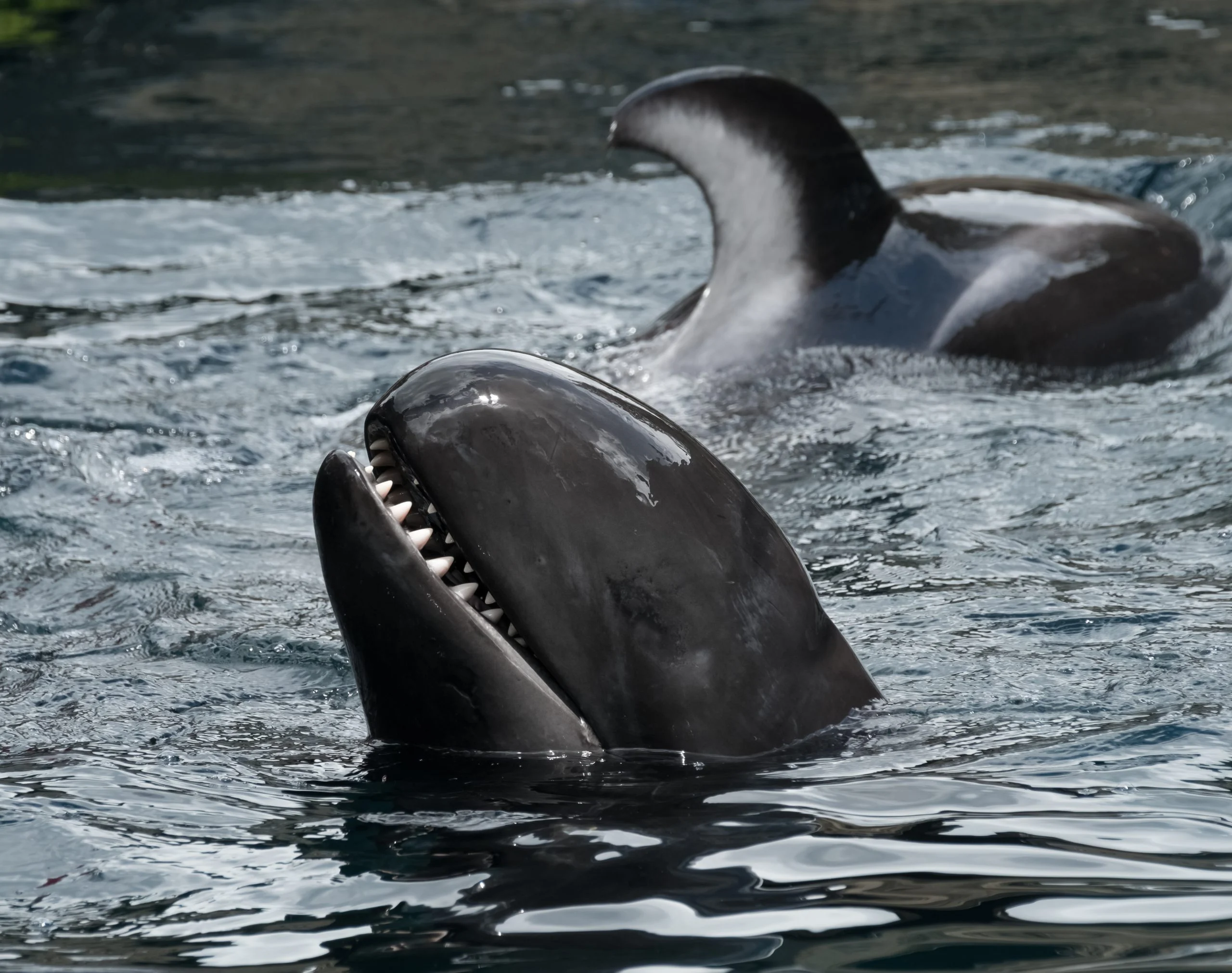
Short-finned pilot whales are found globally in tropical and temperate oceans. They are one of two species of pilot whale, along with the long-finned pilot whale. The two species differ slightly in size, features, coloration, and pattern. In the field and at sea, it is very difficult to tell the difference between the two species.
Short-finned pilot whales are long-lived, slow to reproduce, and highly social. They live in stable groups of 15 to 30 animals composed of close family relatives, and tend to live in localized, resident populations, although some populations have wider ranges. Their diet consists primarily of squid, with a small amount of fish. They are commonly found along the coast close to the continental shelf, although some populations have been found to extend into deep, open ocean environments such as in the eastern tropical Pacific Ocean. Pilot whales are often involved in mass strandings for reasons that are still unclear.
Three stocks of short-finned pilot whales are recognized in U.S. waters, which live along the U.S. east and west coasts, and around the Hawaiian Islands. On the west coast, short-finned pilot whales were once commonly seen, with an apparently resident population around Santa Catalina Island. After a strong El Niño in 1982 and 1983, short-finned pilot whales virtually disappeared from this area, and there are now thought to be about 800 animals in the West Coast stock. About 23,500 animals comprise the East Coast stock, around 2,000 in the Gulf of Mexico stock, and about 9,000 animals in the Hawaiian stock.
Lifespan & Reproduction
The oldest estimated age of false killer whales (based on growth layers in teeth) is 63 years for females and 58 years for males.
Female false killer whales reach sexual maturity between the ages of 8 and 11, while males mature 8 to 10 years later. Gestation ranges from 11 to 16 months, and lactation occurs for 1.5 to 2 years. Time between births is unknown but is estimated to be around 7 years. Female false killer whales enter menopause and become less reproductively successful between 44 and 55 years old.
Threats
Competition with Fisheries
Prey items for false killer whales are similar to many of the same species that fisheries target. This is particularly true in Hawaiʻi, where preferred fish for both false killer whales and consumers are tuna, billfish, wahoo, and mahimahi.
Environmental Contaminants
False killer whales are long-lived, upper-trophic-level predators (that is, they’re near the top of the food chain), so they accumulate high levels of toxins from the marine environment. Exposure to toxic chemicals in the marine environment, including persistent organic pollutants (industrial chemicals and pesticides, heavy metals, etc.), can result in a number of biological effects to marine mammals, such as diseases and reproductive issues. It can also affect the quality and quantity of false killer whales’ prey. Although the United States has banned many of these chemicals, some continue to be used in other regions of the world and can be transported via atmospheric means or ocean currents.
Hunting
False killer whales are hunted in other parts of the world, including Indonesia, Japan, and the West Indies.
Fishery Interactions
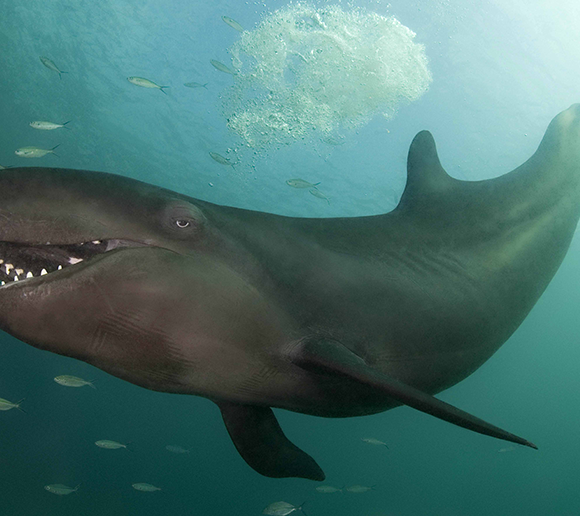
Fishery interactions occur when false killer whales take (or depredate) bait and catch off fishing lines. This action can result in incidental take—unintentional hooking and/or entanglement—as well as serious injury and/or death. False killer whales in Hawaiʻi, particularly main Hawaiian Islands insular false killer whales, have a high rate of dorsal fin injuries and mouthline injuries, likely caused by efforts to take bait and catch from fishing lines.
Small Population Size
The small size of the endangered main Hawaiian Islands insular false killer whale population poses a unique threat to this group. Within a small, highly social population, the potential for reduced genetic diversity increases, potentially making the population more vulnerable to diseases or other environmental changes. Such environmental events may further harm the population by causing a genetic bottleneck—a reduction in the variation of the gene pool that only rebounds when the population breeds with other populations or enough random genetic mutations have accumulated over many generations. Such a small population may also suffer from a breakdown of cooperative feeding if an aggregation is not large enough to find adequate food.