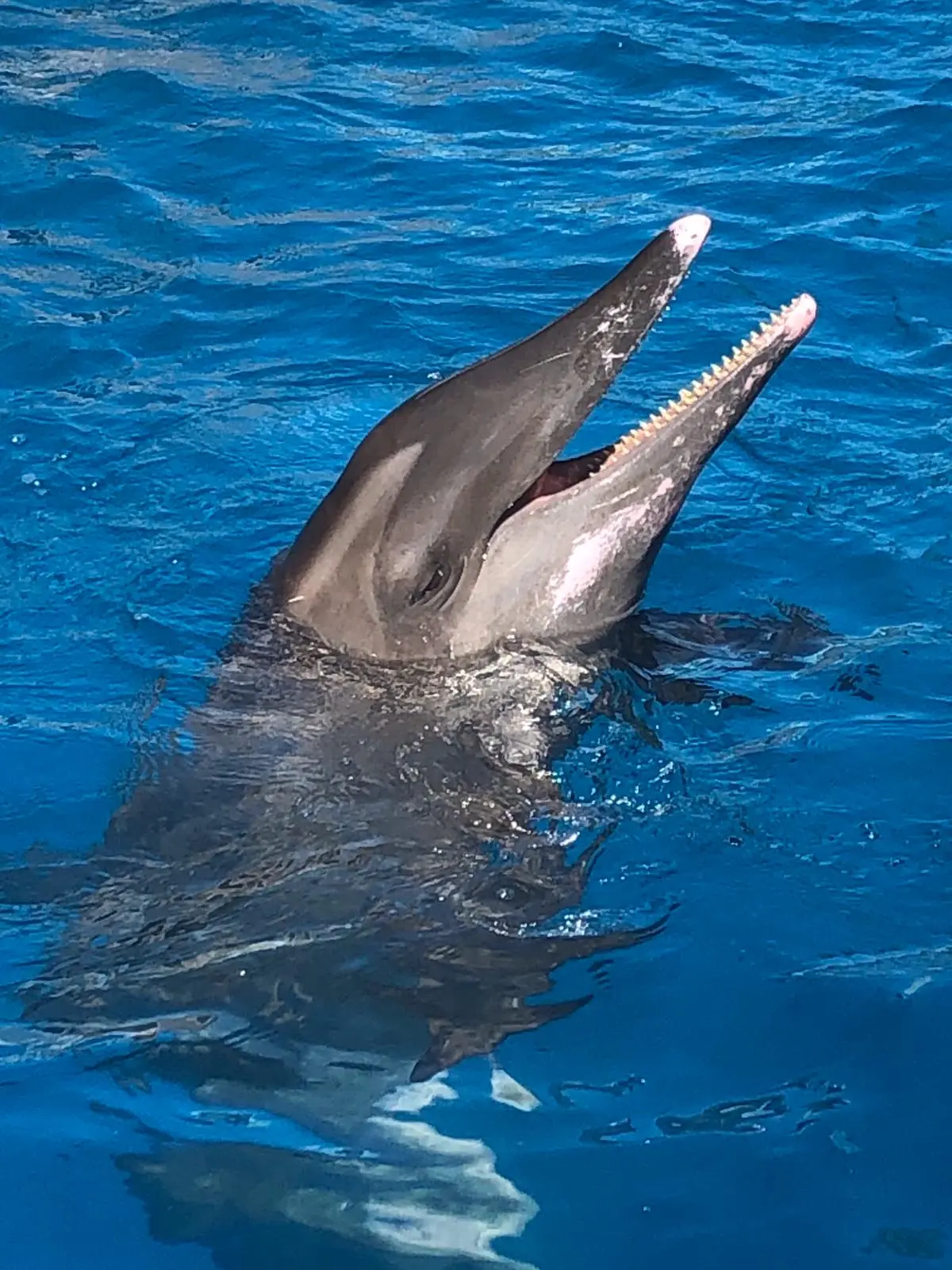
Rough-Tooth Dolphin
- Scientific Name: Steno bredanesis
- Length: 8.5 feet
- Weight: 200-340 pounds
- Numbers: Gathering numbers and data
The Rough-toothed Dolphins are deep divers and can be seen in the deeper parts of the Hawaii islands. They are friendly and known the follow boats and show up to interact with divers.
Rough-toothed dolphins are found throughout the world in tropical and warmer temperate waters. These small members of the dolphin family usually travel in small, tight-knit groups of two to 20 individuals. Their common name was based on the ridges found on their teeth, which are unique to this species.
Rough-toothed dolphins can remain underwater for up to 15 minutes. They can also adapt well to captivity, which is unusual for oceanic dolphins.

Appearance
Rough-toothed dolphins are relatively small compared to other dolphins. They can reach up to 8.5 feet in length and weigh about 350 pounds. They have a small head with a long rostrum and no demarcation between their gently sloping melon (or forehead) and rostrum. Their dorsal fin and pectoral fins or flippers are distinctively large, which is characteristic of this species. They have a “reptilian” appearance that is also distinct and unique among dolphins.
Rough-toothed dolphins have dark gray bodies with a white throat and “lips.” They also have a narrow dark cape that runs down their back between the blowhole and dorsal fin. Their underside usually has some white or lighter spots or blotches.


Behavior and Diet
Rough-toothed dolphins are usually found in tight-knit groups of approximately 10 to 20 individuals. However in Hawaii, they are found in smaller groups of on average three individuals and a median group size of seven; they are rarely observed in larger groups of up to 100 individuals. They often associate with other cetacean species, including short-finned pilot whales, bottlenose dolphins, pantropical spotted dolphins, and spinner dolphins. They eat squid and different types of fish.
Where They Live
Rough-toothed dolphins are found in deep oceanic waters throughout tropical and warmer temperate areas of the world. They are generally found in the Atlantic, Indian, and Pacific Oceans from 40° North to 35° South. The main factor in determining their preferred habitat is the abundance of prey.
Lifespan & Reproduction
Rough-toothed dolphins can live for up to 36 or more years. Sexual maturity occurs at 10 to 14 years of age. Little else is known about their reproductive behavior.
Threats
Entanglement
One of the main threats to rough-toothed dolphins is getting entangled or captured in commercial fishing gear, such as gillnets and in drive fisheries outside of the U.S., which can injure or kill them. While there is no reported bycatch from U.S. fisheries, rough-toothed dolphins are known to take bait from fisheries in Hawaiߵi.
Hunting
Rough-toothed dolphins have been killed in direct fisheries in Japan, Sri Lanka, Indonesia, Papua New Guinea, the Solomon Islands, West Africa, and the Caribbean Sea.
Ocean Noise
Underwater noise pollution interrupts the normal behavior of rough-toothed dolphins, which rely on sound to communicate and echolocate. If loud enough, noise can cause temporary or permanent hearing loss. Noise interference from vessels, as well as industrial and military activities, disturbs rough-toothed dolphins’ feeding, communication, and orientation.